Burning Fast, Going Nowhere: The Hidden Cost of Treating Velocity as a Success Metric
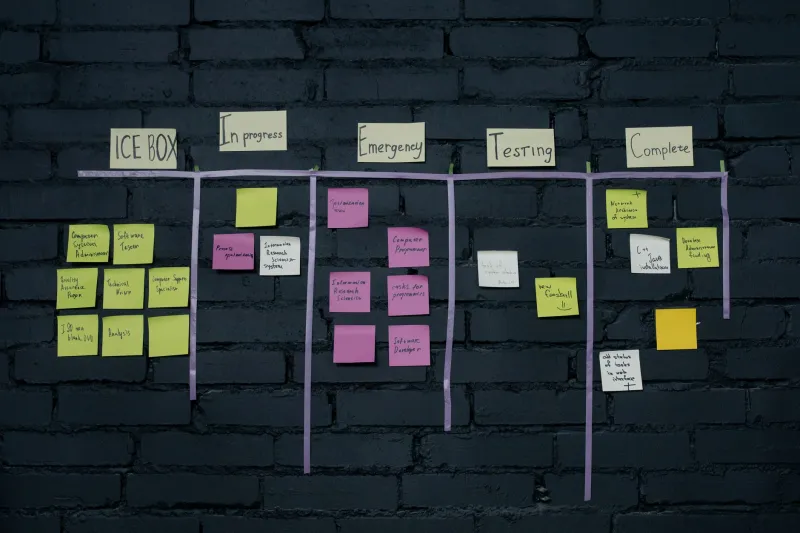
Let's talk about the burndown chart. That satisfying diagonal line descending toward zero. The sprint velocity trending upward quarter over quarter. The story points piling up in the "Done" column like trophies.
Now let's talk about the engineering team that's quietly drowning underneath those numbers.
Velocity, as a primary measure of engineering progress, has a seductive logic: more points shipped means more value delivered. It's measurable, it's comparable across sprints, and it gives stakeholders a number to put in a slide deck. The problem is that it measures throughput, not direction. And a team that's moving fast in the wrong direction — or moving fast while quietly accumulating structural debt — isn't making progress. It's digging a hole with better equipment.
What Velocity Actually Measures
Story points are, at their most honest, a measure of relative effort and complexity as perceived by the team at the moment of estimation. They're not units of value. They're not units of quality. They're not even reliable units of time.
When velocity becomes a KPI — when engineering managers report it upward and teams feel implicit pressure to maintain or grow it — the metric starts driving behavior in ways that have nothing to do with building good software.
Estimations inflate to protect the team from looking slow. Scope gets quietly trimmed to hit sprint commitments. Testing gets abbreviated. Edge cases get deferred. Technical improvements — the kind that make the next ten sprints faster and safer — get deprioritized because they don't produce visible story points.
None of these behaviors are malicious. They're rational responses to the incentive structure velocity creates. But they compound. Each shortcut taken to protect the velocity number makes the next sprint incrementally harder, which creates more pressure to take more shortcuts, which makes the sprint after that harder still.
This is the velocity trap: the metric that was supposed to measure progress becomes the mechanism that undermines it.
The Calcification Problem
There's a term in materials science for what happens when a structure accumulates stress in ways that don't relieve themselves: it becomes brittle. One more load and it fractures.
Codebases do the same thing. When teams optimize for throughput over sustainability, the technical shortcuts don't disappear — they calcify. The quick fix that shipped in Q2 becomes the load-bearing hack that nobody can touch in Q4. The deferred refactor becomes the module everyone is afraid to modify. The skipped abstraction becomes the reason that adding a new feature requires changes in eleven different places.
The insidious thing about calcification is that it doesn't show up in velocity metrics — until it does, catastrophically. Teams often report steady or even improving velocity right up until the moment a codebase becomes genuinely difficult to extend, at which point velocity collapses and nobody can explain why. The burndown chart looked fine. The story points were trending up. What happened?
What happened was that the metric never captured what was actually going on.
Better Questions to Ask About Progress
This isn't an argument for abandoning measurement. Engineering without feedback loops is just vibes. But the feedback loops need to measure things that actually matter.
Here are some questions worth asking in addition to — or instead of — "what's our velocity this sprint?"
How long does it take to ship a medium-complexity feature end to end? Cycle time, from ticket creation to production deployment, captures something velocity doesn't: whether the process itself is getting better or worse. If story point velocity is up but cycle time is lengthening, something is wrong in the system.
How often do we return to recently shipped code to fix problems we introduced? A high rate of post-release fixes is a signal that quality is being sacrificed for speed. Track it. Name it. Make it visible in retrospectives.
What percentage of each sprint is spent on unplanned work? Unplanned work is almost always a symptom of technical debt demanding payment. If that percentage is growing, the team's capacity is being consumed by the consequences of past shortcuts.
Are the people doing the work getting better at it? This one is harder to quantify, but it matters enormously for long-term team health. Is the team learning, improving their practices, building shared craft? Or are they stuck in a churn loop where every sprint looks the same?
Protecting the Codebase Inside a Velocity Culture
If you're operating inside an organization that's genuinely committed to velocity as the primary metric, you can't just opt out of the conversation. But you can influence it.
Make technical debt visible. Not as a vague complaint, but as a concrete, estimated cost. "Refactoring this module will take two sprints, but it will reduce the time to implement new billing features by roughly 40%." That's a business case, not a gripe.
Build maintenance capacity into sprint planning explicitly. "20% of our capacity is reserved for technical health work" is a defensible position when you can point to the cycle time and defect rate data that justifies it.
Push back on the framing that says velocity is the goal. Velocity is a proxy. The goal is sustainable delivery of working software that users actually want. Sometimes those things align. When they don't, the proxy loses.
Measure What You're Actually Building
A burndown chart can look perfect while a codebase is quietly becoming unmaintainable. That's not a flaw in the team — it's a flaw in what's being measured.
The teams that build things that last aren't the ones that ship the most points per sprint. They're the ones that stay honest about what their metrics are actually capturing, protect the structural health of their systems even when it's inconvenient, and resist the pressure to mistake motion for progress.
Velocity is a tool. Use it like one — with appropriate skepticism about what it measures and clear eyes about what it doesn't.