Code Reviews Are Supposed to Help You Ship Faster — Here's Why They're Doing the Opposite
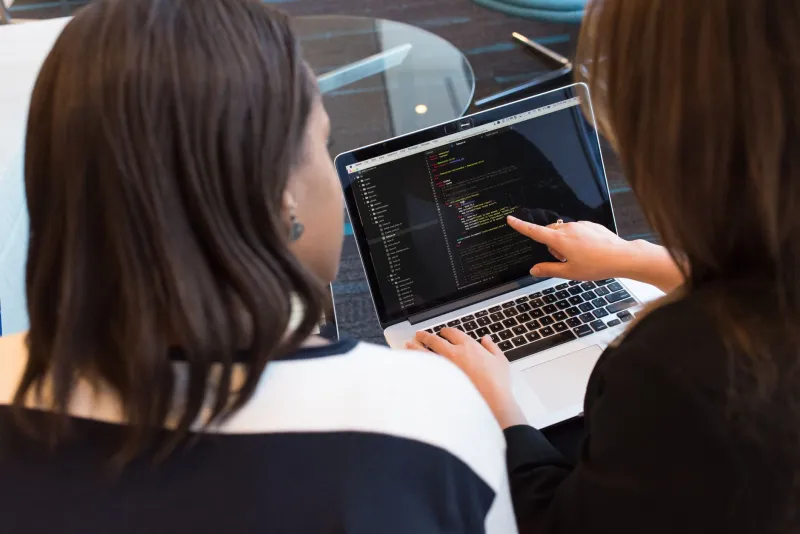
There's a pull request sitting in your team's queue right now. It's been there for three days. The developer who opened it has already context-switched twice, started something new, and quietly started dreading the moment feedback finally arrives — because at this point, revisiting that code is going to feel like archaeology.
Code reviews are one of those practices that every team agrees is important, right up until the process quietly becomes the thing that's killing momentum. The intention is solid: catch bugs early, share knowledge, keep the codebase coherent. But somewhere between good intentions and daily practice, reviews turn into a bottleneck that frustrates developers, delays delivery, and — ironically — doesn't even make the code that much better.
Let's talk about why that happens, and what you can actually do about it.
The Bottleneck Usually Isn't a People Problem
The first instinct when reviews slow down is to blame individuals. Someone isn't reviewing fast enough. Someone is leaving too many nit-picky comments. Someone is being a gatekeeper.
Sometimes that's true. But more often, the problem is structural. The process is set up in a way that almost guarantees friction, regardless of how skilled or well-intentioned the people involved are.
Common structural culprits include:
- No clear ownership — PRs get opened and sit in a shared queue where everyone assumes someone else will pick it up.
- No size conventions — A 1,200-line diff lands in someone's lap on a Friday afternoon. Of course it doesn't get reviewed promptly.
- No separation between blocking and non-blocking feedback — Reviewers conflate "this will cause a production incident" with "I'd personally have named this variable differently," and authors don't know which comments actually need to be addressed before merging.
- Synchronous review culture — Teams that treat reviews like meetings, where everything has to happen in real time, create artificial wait states.
Fix the structure first. The behavior tends to follow.
Right-Sizing Your Pull Requests
If you want faster reviews, the single highest-leverage change most teams can make is keeping PRs small. This sounds obvious. It almost never gets done.
Small PRs — think under 400 lines of meaningful change — get reviewed faster, get better feedback, and are dramatically easier to reason about. Large PRs create cognitive overload. Reviewers skim. Important issues get missed. Comments pile up. The whole thing becomes a negotiation rather than a conversation.
A useful heuristic: if you can't summarize the purpose of your PR in one sentence, it's probably too big. Break it up. Stack your diffs if you need to. Most modern tools — GitHub, GitLab, Linear — support stacked PRs reasonably well at this point.
Pushing back on this is common. "But the feature isn't done yet." That's actually the point. Shipping logic in reviewable increments — even behind a feature flag — is a skill worth developing. It's a core part of what it means to build with purpose rather than just building.
Automate the Stuff That Doesn't Require Human Judgment
A significant chunk of code review feedback falls into a category that shouldn't require a human at all: formatting, linting, test coverage thresholds, type errors, dependency issues. Every comment a reviewer spends on this stuff is attention pulled away from architecture, logic, and design — the things that actually benefit from a second set of eyes.
Get a CI pipeline doing the mechanical work before a human ever looks at the PR. Tools like ESLint, Prettier, RuboCop, Black, or whatever fits your stack can handle style and formatting automatically. Add a coverage gate. Run your type checker. Fail the build on obvious issues.
This isn't about removing human judgment from the process — it's about respecting it. When reviewers aren't spending mental energy on tabs-vs-spaces debates, they can focus on what actually matters.
Async Reviews Need Structure, Not Just Patience
Remote and distributed teams have largely shifted to async review workflows out of necessity, but async only works well when expectations are explicit.
A few patterns that help:
Define response SLAs. Not bureaucratically — just agree as a team that PRs under a certain size get a first look within 24 hours. That single commitment eliminates most of the queue rot.
Use draft PRs intentionally. If a PR is open for early feedback or is genuinely in progress, mark it as a draft. This signals to reviewers that it's not yet queued for full review and removes the ambiguity about when it needs attention.
Separate review rounds from approval. Not every comment thread needs to be resolved before a PR moves forward. Teams that distinguish between "requires changes before merge" and "here's a thought for the future" create much more productive feedback loops.
The Language of Code Review Matters More Than You Think
Here's something that rarely shows up in engineering process docs: how feedback is worded has a massive impact on whether review culture feels collaborative or adversarial.
Compare these two comments:
- "This is wrong. Use a hash map instead."
- "Hey, a hash map might give us better lookup performance here — worth considering?"
The technical content is identical. The second one doesn't put the author on the defensive. It opens a conversation.
Conventional Comments (a lightweight labeling system popularized in the developer community) is worth looking at. The idea is simple: prefix your comments with a label like nit:, suggestion:, issue:, or question: so the author immediately knows how to weight the feedback. A nit: is low-stakes. An issue: needs to be addressed. This tiny change removes enormous amounts of ambiguity.
Also worth saying explicitly: praise is part of good review culture. When someone writes genuinely clean code, solves a hard problem elegantly, or improves something they didn't have to touch — say so. It takes five seconds and does a lot for team morale.
Reviewing Code Is a Skill You Have to Develop Deliberately
Most developers learn to write code through intentional practice — tutorials, projects, feedback loops. Almost nobody is explicitly taught how to review code. It's treated as something you just figure out.
That's a mistake. Reviewing well requires a different mental model than writing. You're reading for intent, not just correctness. You're asking whether the change fits the broader architecture, whether the tests actually cover the right cases, whether the naming communicates clearly to the next person who reads it.
If your team has never talked explicitly about what a good review looks like, that conversation is worth having. What are you actually trying to accomplish with reviews? What's in scope and what isn't? How do you handle disagreements?
Answering those questions out loud — even once — tends to dramatically improve the quality and speed of the process.
The Goal Is Shared Ownership, Not a Gatekeeping Ritual
At its best, a code review is a lightweight knowledge-transfer session. The reviewer learns something about a corner of the codebase they might not have touched. The author gets a sanity check and a second perspective. The team collectively owns the output.
At its worst, it's a tollbooth — a process that exists to slow things down in the name of quality, without actually producing much quality.
The difference between those two outcomes comes down to structure, expectations, and communication. None of that is particularly complicated. It mostly just requires someone to name the problem and be willing to iterate on the process the same way you'd iterate on the code.
Ship the review improvements first. The rest tends to follow.